OT Driving assessments: helping you stay safe behind the wheel
Helping You Stay Safe and Independent Behind the Wheel
Occupational therapy driving assessments for people whose health, disability or physical abilities have changed.
Changes in strength, movement, coordination, reaction time, vision or cognition can affect the way you drive. An OT driving assessment can help determine how these changes may be affecting your driving and whether modifications, strategies or further assessment may help you continue driving safely.
At Ganly Allied Health, our occupational therapists take a person-centred and practical approach to driving assessment. We consider your individual abilities, your vehicle, your driving needs and the recommendations that may help you continue to drive safely and confidently.
Talk to our OT team about a driving assessment.
Has driving become more difficult?
You might be noticing that:
Your physical abilities have changed.
You are finding it harder to control the steering wheel.
Using the pedals has become difficult.
You have reduced strength or movement in your arms or legs.
Your reaction times have changed.
You are experiencing difficulties with coordination.
You have noticed changes in your vision.
You are finding complex traffic situations more challenging.
You have concerns about your ability to drive safely.
Someone close to you has raised concerns about your driving.
You've recently experienced an injury, illness or change in your health.
You want to return to driving after an injury or illness.
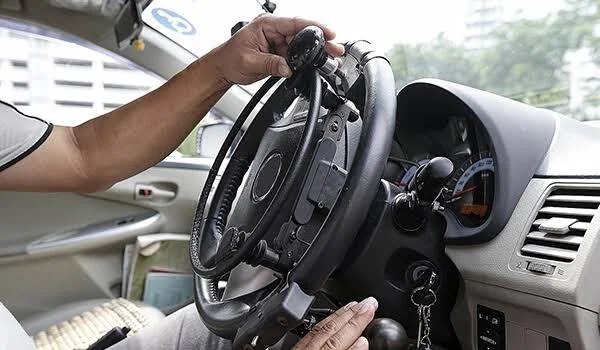
You're wondering whether vehicle modifications could help you continue driving.
You don't have to wait until you're no longer confident behind the wheel to seek help.
An assessment can help identify what you're able to do safely and whether there are strategies or modifications that may support you.
Driving is about more than getting from A to B.
For many people, driving represents freedom, independence and connection.
It's how you may:
Get to work
Attend appointments
Visit family and friends
Go shopping
Participate in the community
Manage everyday responsibilities
Maintain your independence
When your physical abilities change, it can be difficult to know whether you can continue driving safely.
Our role is to help you understand your abilities and identify appropriate next steps.
What is an OT driving assessment?
An occupational therapy driving assessment considers how your health and functional abilities may affect your ability to drive safely.
Depending on your circumstances, your assessment may consider:
Cognitive abilities
Including attention, concentration, processing and decision-making.
Vision
Considering visual abilities that are important for safe driving.
Physical abilities
Including strength, range of movement, coordination and sensation.
Vehicle access
Looking at how you get into and out of your vehicle and whether this can be done safely.
Vehicle controls
Considering your ability to operate steering, pedals and other vehicle controls.
Seating & positioning
Assessing your ability to achieve an appropriate and functional driving position.
On-road performance
Where required and appropriate, practical driving may be undertaken to assess how you manage real-world driving situations
How can we help?
Our occupational therapists can assist with:
Returning to driving
If you've stopped driving following an injury, illness or change in your physical abilities, we can help assess your current capabilities and identify appropriate next steps.
Maintaining your licence
If your health or disability has changed, an assessment can help determine whether you can continue driving safely and whether any conditions or adaptations may be required.
Vehicle modifications
If physical limitations are affecting your ability to operate your vehicle, we can consider whether modifications or specialised controls may help.
Driving after neurological conditions
We can assess people experiencing functional changes associated with conditions such as:
Stroke
Acquired brain injury
Multiple sclerosis
Parkinson's disease
Huntington's disease
Motor neurone disease
Cerebral palsy
Other neurological conditions
Driving after amputation or physical injury
We can assess how changes in limb function, strength, movement or sensation may affect driving and whether vehicle adaptations may assist.
Concerns about driving safety
If you or your family have noticed changes in your driving, an OT assessment can provide a structured assessment of your current abilities and help determine appropriate next steps.
What happens next?
1. Get in touch
Tell us what's changed or what you're concerned about with your driving.
You don't need to know whether you need an assessment, we can talk you through the process.
2. We discuss your circumstances
We'll talk about your health, disability, functional abilities, driving history, current vehicle and any concerns you or others have identified.
3. Your OT completes an assessment
We'll assess the functional abilities relevant to driving and consider how these may affect your ability to safely operate a vehicle.
4. Practical driving assessment
Where appropriate, a practical on-road assessment may be completed to assess your driving performance in real-world situations.
5. We identify recommendations
Depending on the outcome, recommendations may include:
Continuing to drive
Further assessment
Driving strategies
Vehicle modifications
Specialist driving controls
Additional driver training
Restrictions or conditions
Further medical or professional review
6. We help you understand the next steps
We'll explain the assessment findings and recommendations clearly and work with you and your relevant professionals to support the next stage of the process.
An OT driving assessment isn't about taking away your independence. It's about understanding your current abilities and determining what you may need to drive safely.
For some people, the answer may be that they can continue driving. For others, modifications, strategies, training or further assessment may be appropriate. And sometimes, an assessment identifies that driving is no longer safe.
Our role is to provide an objective, professional assessment and help you understand your options.
Giving up driving can feel like giving up a significant part of your independence.
If your health or disability has changed, you don't have to guess whether you can still drive safely.
An occupational therapy driving assessment can help you understand what you're able to do, what may need to change and what options are available to you. Simply fill out the form below and we’ll be in touch to discuss your needs.